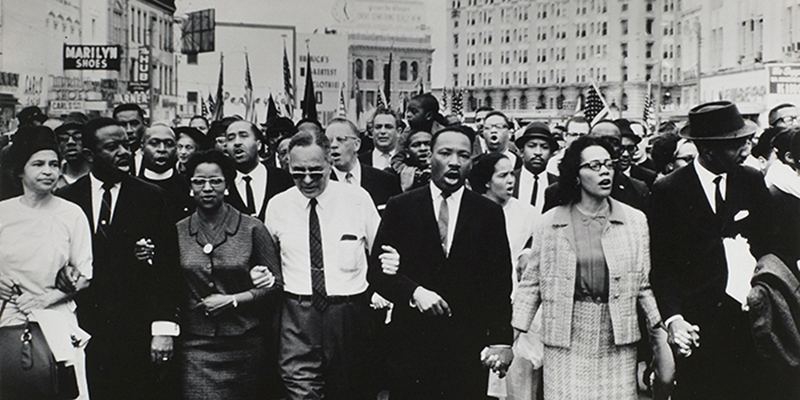
2020 has been our countries most tumultuous year since the assassination of Dr. Martin Luther King Jr. on April 4, 1968. Since June there have been mass uprisings over racial injustice rarely seen since Dr. King’s leadership of
the civil rights movement 60 years ago. King often said that riots are the language of the unheard. He empathized with those who rioted, although he never condoned violence.
Protestors spill out onto the streets, driven by fury. They march. They kneel. They sing. They cry. They pray. They light candles. They chant and shout, demanding voices, muffled behind masks. They block freeways and bridges and
fill public squares. They lie their bodies onto hot asphalt, silently breathing for eight minutes and 46 seconds.
Eight minutes and 46 seconds, exactly how long it took to take the life of George Floyd. Floyd was a black man who died at the hands of a white police officer, who pressed his left knee on his neck. There have been many unjust
African American deaths, Floyd’s death was the tipping point that unleashed one of the most explosive trials of American racism setting fourth mass protests.
Violence against African-Americans is not unfamiliar. You know their names: Trayvon Martin; Tamir Rice; Michael Brown; Philando Castile; Sandra Bland; and Eric Garner, who uttered the same anguished pleas as Mr. Floyd — “I can’t
breathe. I can’t breathe.” But never before have the cries carried such an impact. Across the country, Americans stand shoulder to shoulder in support of the Black Lives Matter movement. Within 24 hours of Mr. Floyd’s death,
demonstrations were organized in a half-dozen U.S. cities, with protesters chanting the names of black people subjected to police brutality. The number of places doubled. Then tripled. There was continued support as hundreds
of thousands of people took to the streets across more than 2,000 cities and towns, their chants echoing the cries of movements past.
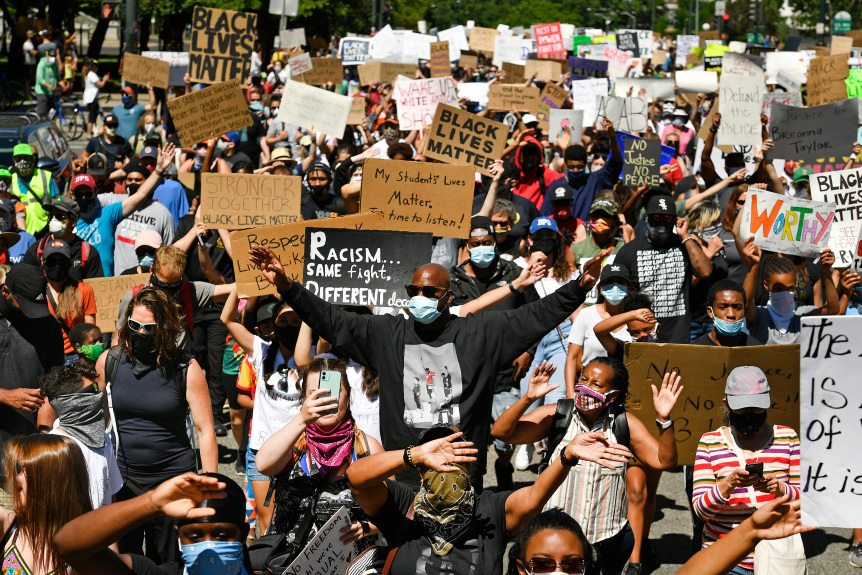
Photo by Shelly Bradbury | The Denver Post
They protested in every single state and in Washington, D.C., with turnouts that ranged from dozens to the tens of thousands. From a town square in Montrose, Ga., to Times Square in New York. From the northern tip of Minnesota
to Hanalei Pier in Hawaii. The demonstrators — black, brown, white, a mix of fed-up first-timers and veterans who had marched many times on those same streets — could not be stopped.